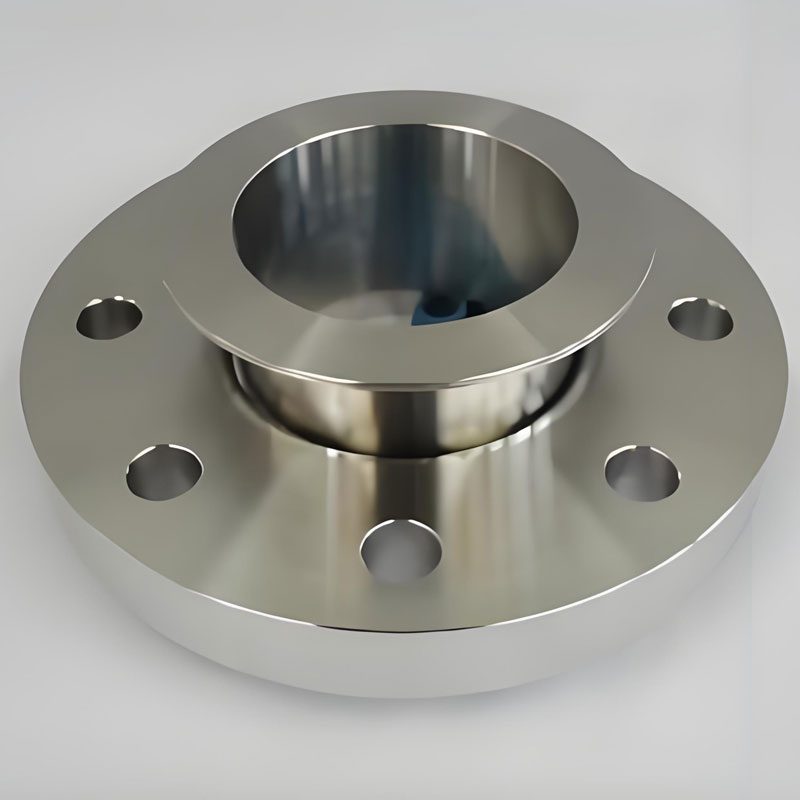
Rotating loose flange used with a stub end — easy bolt-hole alignment and cheap to replace.
| Size range | DN10–DN2000 (NPS 3/8–80) |
|---|---|
| Pressure class | PN0.6–PN40, Class 150–2500, JIS 5K–20K |
| Standards | ASME B16.5, HG/T 20592-2009, GB/T 9122-2010, DIN 2573 / 2576, JIS B2220 |
| Face types | RF, FF, MFM, TG, RJ |
| Supplied as | Flange + matching stub end (long or short pattern) |
| Bolt holes | 4–48 holes, M10–M27, drilled to template |
A lap joint flange slips over a stub end that is welded to the pipe. The flange itself never touches the process fluid, so it can rotate freely for bolt alignment and can be made in a lower grade than the wetted part — which is how expensive alloy lines are kept affordable.
Frequent dismantling: the bolts come out and the flange slides back without cutting pipe.
Cost control on nickel-alloy lines: only the stub end is made in C-276 or 625, the backing flange can be carbon steel or 316L.
Thermal movement: the joint absorbs small axial displacement instead of loading the flange face.
The lap joint is not a high-fatigue connection. Do not specify it where vibration, water-hammer or repeated bending is present — use a weld neck there.
Pressure rating follows the stub end, not the backing ring; both must be ordered as a matched pair.
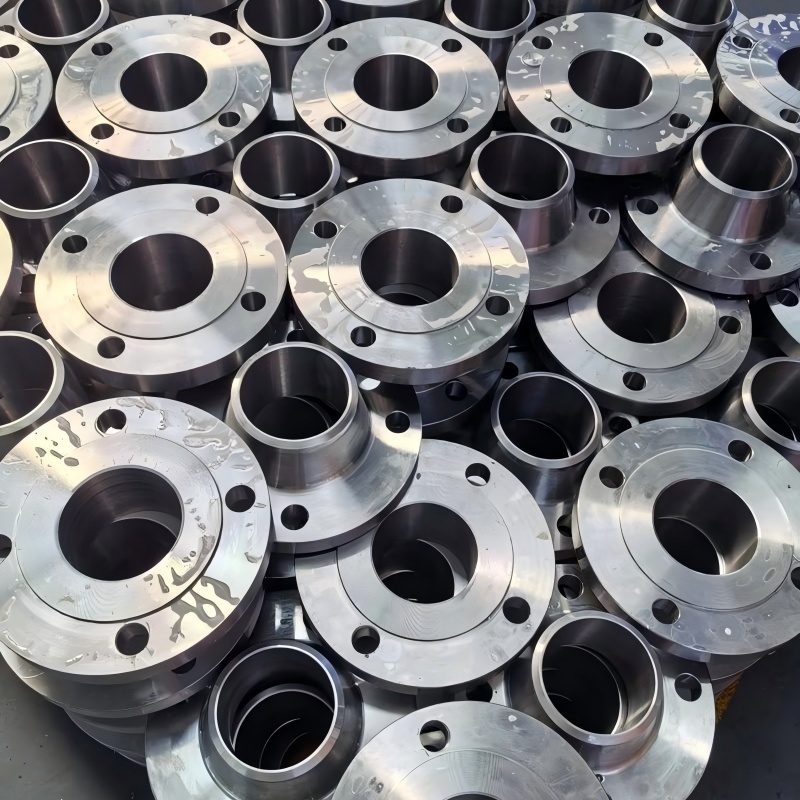
Long-hub WN flange butt-welded to pipe, for high pressure and cyclic service.
Specifications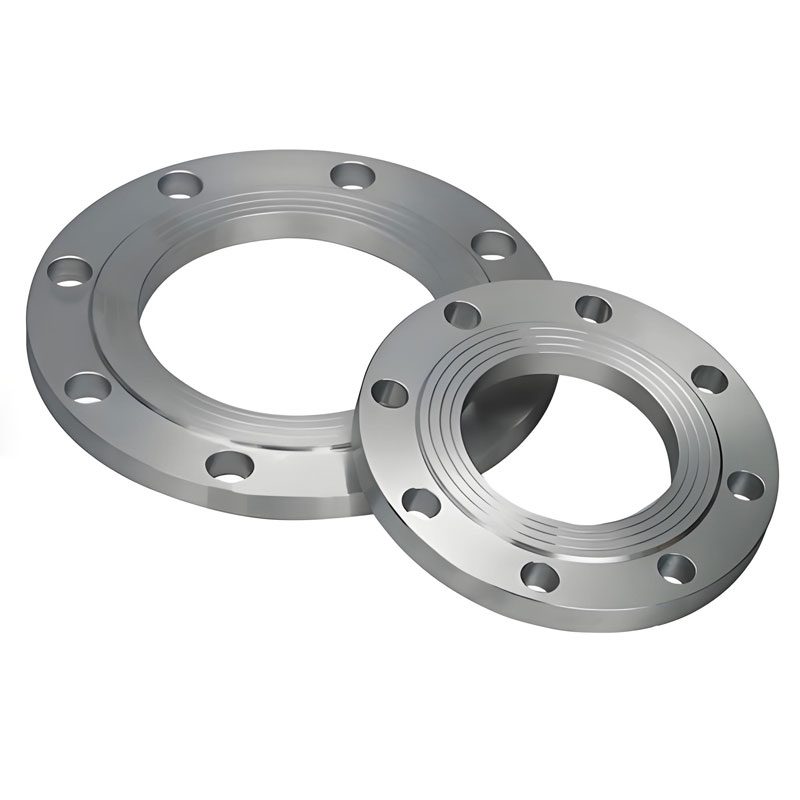
Plate flange slipped over the pipe and fillet-welded both sides — the economical standard flange.
Specifications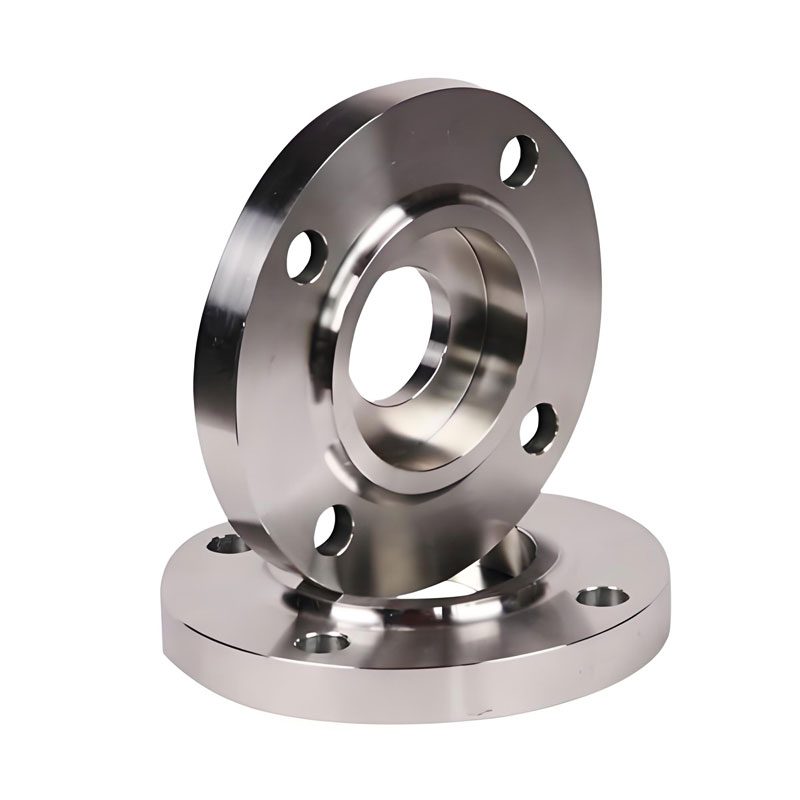
Small-bore socket weld flange, single external weld, DN6–DN100.
SpecificationsQuotes within one business day. Send grade, size, pressure class, face type and quantity — a drawing works better than a description.
