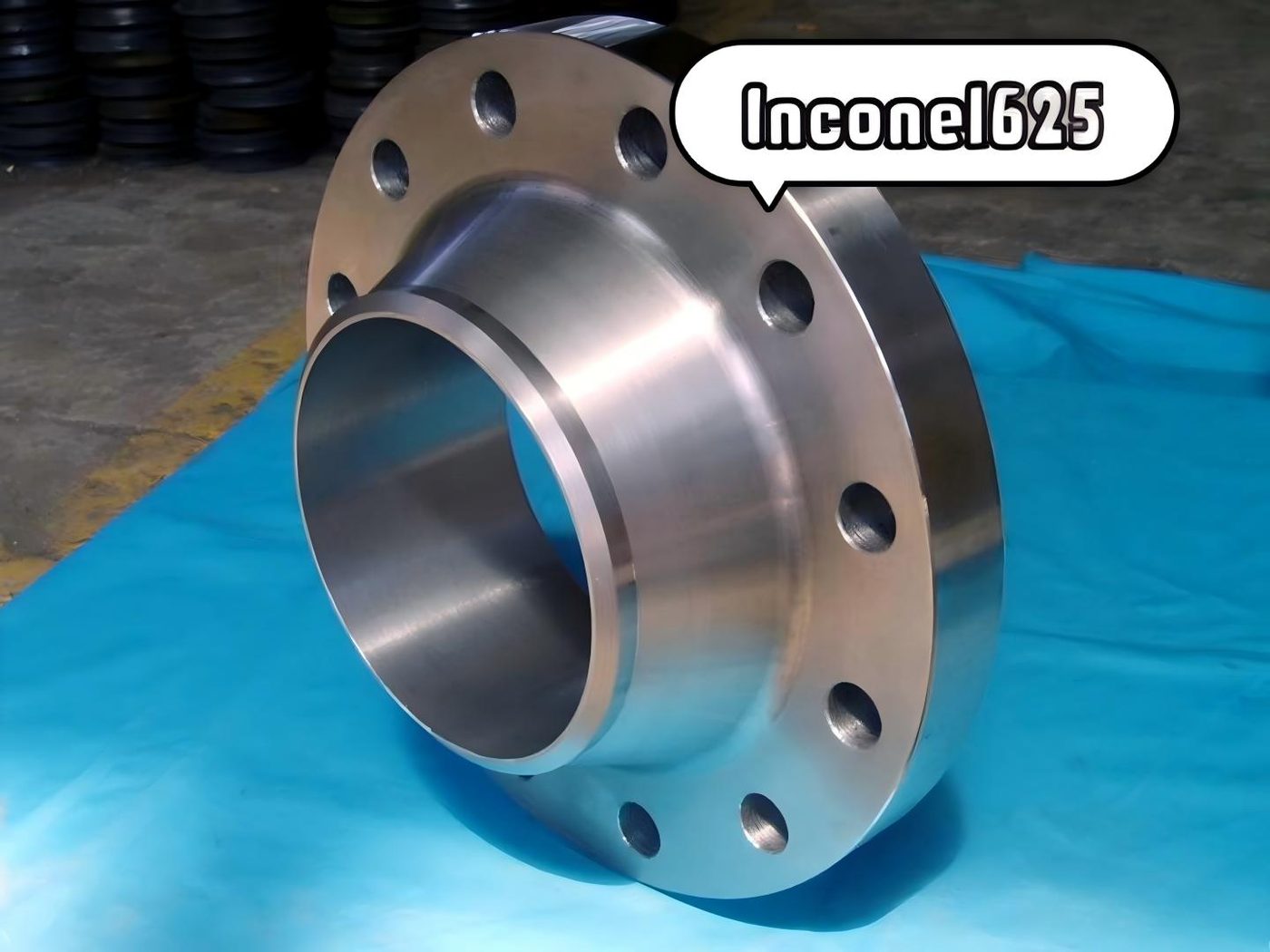
Flanges in Hastelloy, Inconel, Monel and titanium for extreme corrosion or temperature.
| Size range | DN10–DN2000; OD 75–2190 mm |
|---|---|
| Pressure class | PN6–PN42.0, Class 150–2500 |
| Face types | RF, FF, MFM, TG, RJ (octagonal or oval ring groove) |
| Standards | ASME B16.5 / B16.47, EN 1092-1, HG/T 20592-2009, ASTM B564, ASTM B381, ASTM F67 / F136 |
| Heat treatment | Solution annealed; hardness verified after treatment |
| Testing | PMI, hardness, UT, hydrostatic, third-party witness on request |
When 316L is not enough — chlorides above 60 °C, wet H2S, hydrofluoric acid, or 700 °C process gas — the flange is made in a nickel or titanium alloy. The metallurgy, the forging route and the inspection all have to be right, because a failed joint here stops a plant.
Hastelloy C-276 / C-22 for mixed acid and chloride service; B-2 / B-3 for hydrochloric acid; G-30 / G-35 for phosphoric acid.
Inconel 600 / 601 / 625 / 690 for high temperature and oxidising conditions; Monel 400 for HF and seawater; alloy 20 for sulphuric acid.
Titanium Gr2 / Gr7 / Gr12 and super austenitic 254SMO / AL-6XN where chloride pitting is the design case.
Vacuum or ESR-clean material, forged and solution annealed, then machined with dedicated tooling to avoid cross-contamination with carbon steel.
PMI on 100% of parts, hardness after heat treatment, and a 3.1 certificate that names the UNS number — not just a trade name.
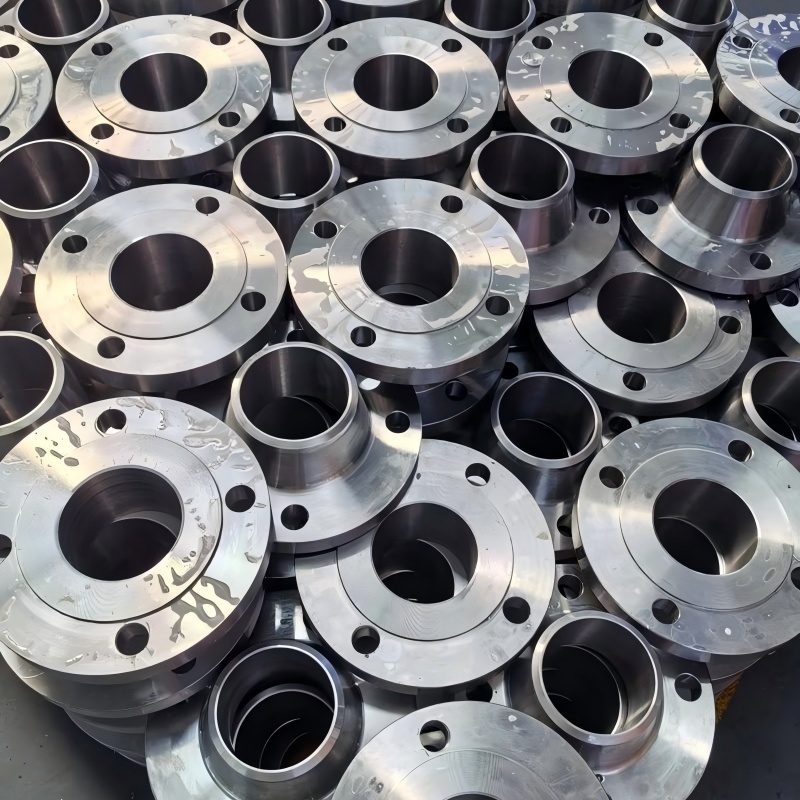
Long-hub WN flange butt-welded to pipe, for high pressure and cyclic service.
Specifications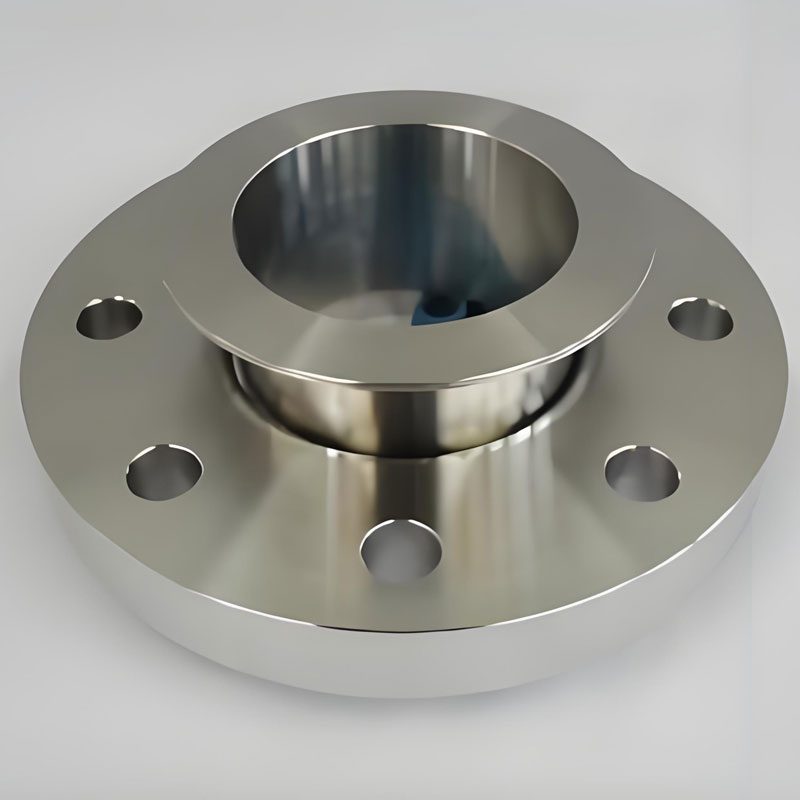
Rotating loose flange used with a stub end — easy bolt-hole alignment and cheap to replace.
Specifications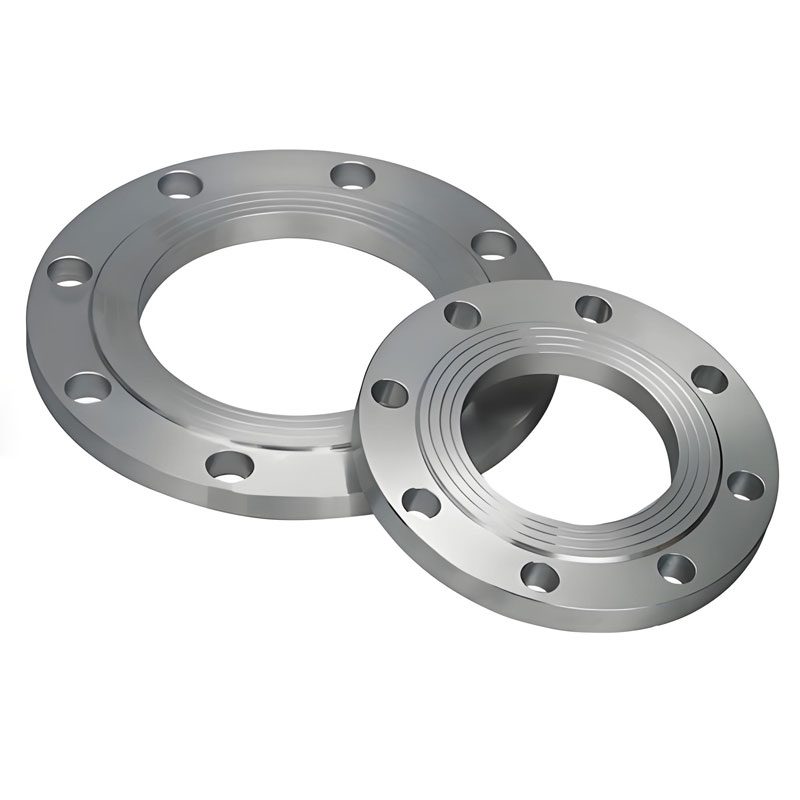
Plate flange slipped over the pipe and fillet-welded both sides — the economical standard flange.
SpecificationsQuotes within one business day. Send grade, size, pressure class, face type and quantity — a drawing works better than a description.
